
Tutorial: Crafting Your Perfect COBIT 2019 Governance System
Ever tried to fit a square peg into a round hole? That’s what it’s like when you try to apply a generic governance system to a unique business. Don’t sweat it! Let’s get into the nitty-gritty of the COBIT 2019 governance system and how you can tailor it to fit your business like a glove.
Breaking Down the Process
The COBIT 2019 system is all about making sure your tech governance vibes well with your business needs. Picture it like tailoring a suit – you want it to fit just right. Let’s dive into the workflow:
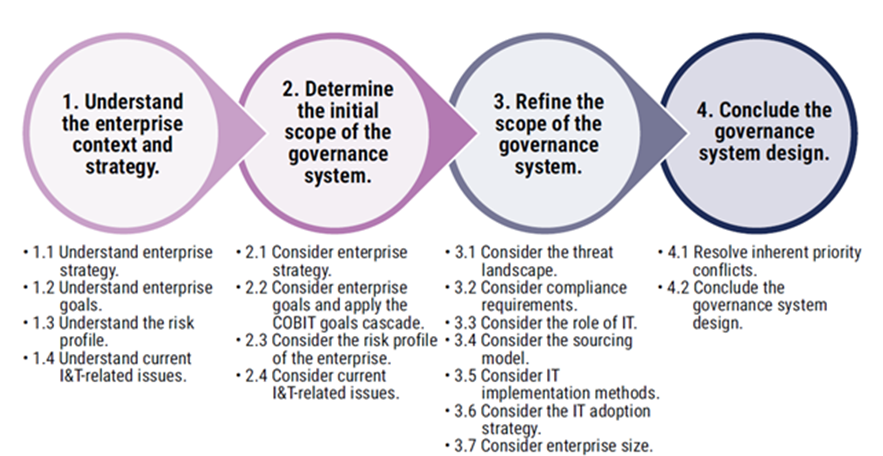
- Understanding Your Scene: Start by getting the lay of the land. What’s your business strategy? What goals are you chasing? Know any tech-related risks lurking around? This phase is like your homework before the main event.
- Laying the Foundations: Here’s where we zoom in. Think about your business goals and the tech stuff that’s currently on your plate. By the end of this phase, you’ll have a clear idea of your governance priorities.
- Fine-tuning: Now, let’s refine things. Consider the cyber threats out there, how tech fits into your company, and the size of your enterprise. By the time you’re done, you’ll have a clearer picture of what your governance should look like.
- Sealing the Deal: This is where you wrap it all up and design that tailored COBIT 2019 governance system
Playing Around with the COBIT Excel Toolkit
If you’re an Excel geek, you’ll love this part. The toolkit does all the mathy stuff based on your inputs. Here’s a quick tour:
- Introduction Tab: This is your starting point. It’s like the preface of a book, giving you an overview.
- Canva Tab: This one’s super interesting! It shows you how each objective’s importance changes as you move through the process. It’s like watching a plant grow, but in fast motion.
- Design Factor Tabs: Here, you’ll jot down all the juicy details from your interviews.
The rest of the tabs and calculations help you gauge the importance of various objectives based on the data you put in.
Doing the Chats (Interviews)
Picture this toolkit as a mega-questionnaire. The best part? By the end of an interview, the person you’re chatting with can see the impact of their answers. Though be mindful, face-to-face or video call interviews are way better than online surveys. You’ll get richer insights, trust me.
Tying it All Together (Consolidation)
After you’ve gathered all your inputs, you’ll want to pull everything together. Combine the data, crunch the numbers, and look for patterns. It’s like baking; you’re mixing all the ingredients to get the perfect result.
Rating Your Progress (Assessment)
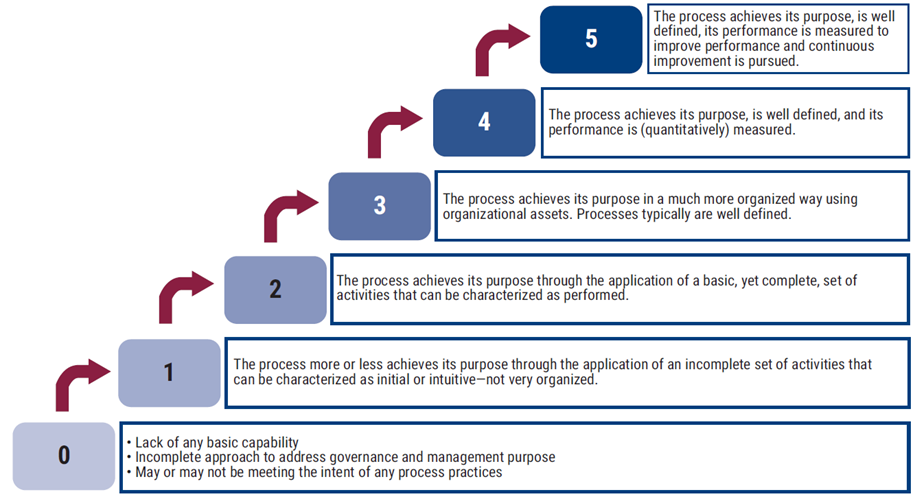
Ever heard of CMMI®? It’s a maturity model that COBIT uses. It gives you a sense of how well your processes are humming along. It’s like getting a grade in school. Based on your self-assessment, you can figure out where you’re shining and where you need to pull up your socks.
Conclusion: Bringing It All Home
At the heart of a successful business lies a governance system that resonates with its core values, goals, and challenges. With COBIT 2019, we’re not looking at a one-size-fits-all approach, but a toolkit that allows organizations to craft a governance structure that echoes their unique identity. It’s akin to having a roadmap that’s customizable to the terrains you’re familiar with. By understanding the nuances of your enterprise, engaging in meaningful dialogue, and employing the powerful COBIT toolkit, you’re setting your business up for informed decision-making, risk management, and a robust future. As with any tool, however, its efficacy depends on the craftsperson wielding it. So, dive in, tailor it, and let COBIT 2019 be the guide to your organization’s success story.
Bibliography
- ISACA. (2013). Self-assessment Guide: Using COBIT5. ISACA.
- ISACA. (2018a). COBIT® 2019 Design Guide: Designing an Information and Technology Governance Solution.
- ISACA. (2018b). COBIT 2019 Framework: Introduction and Methodology.
